Spicy Drunken Noodles Recipe – Quick & Delicious Pad Kee Mao
Drunken noodles, or Pad Kee Mao, are more than just a meal; they’re an experience. This vibrant and utterly satisfying Thai stir-fry has a way of captivating taste buds and leaving you craving more with every spicy, savory, and slightly sweet bite. What is it about drunken noodles that makes them so universally adored? It’s that non-intoxicating blend of wide, chewy rice noodles wok-kissed to perfection, swimming in a sauce that’s both bold and complex. We’re talking fresh chilies that deliver a pleasant kick, aromatic garlic, fragrant basil, and often a delightful protein like chicken, beef, or shrimp. The magic lies in its ability to be both comforting and exhilarating, a dish that feels just right whether you’re unwinding after a long day or celebrating a special occasion. Get ready to discover how to recreate this sensational dish in your own kitchen!
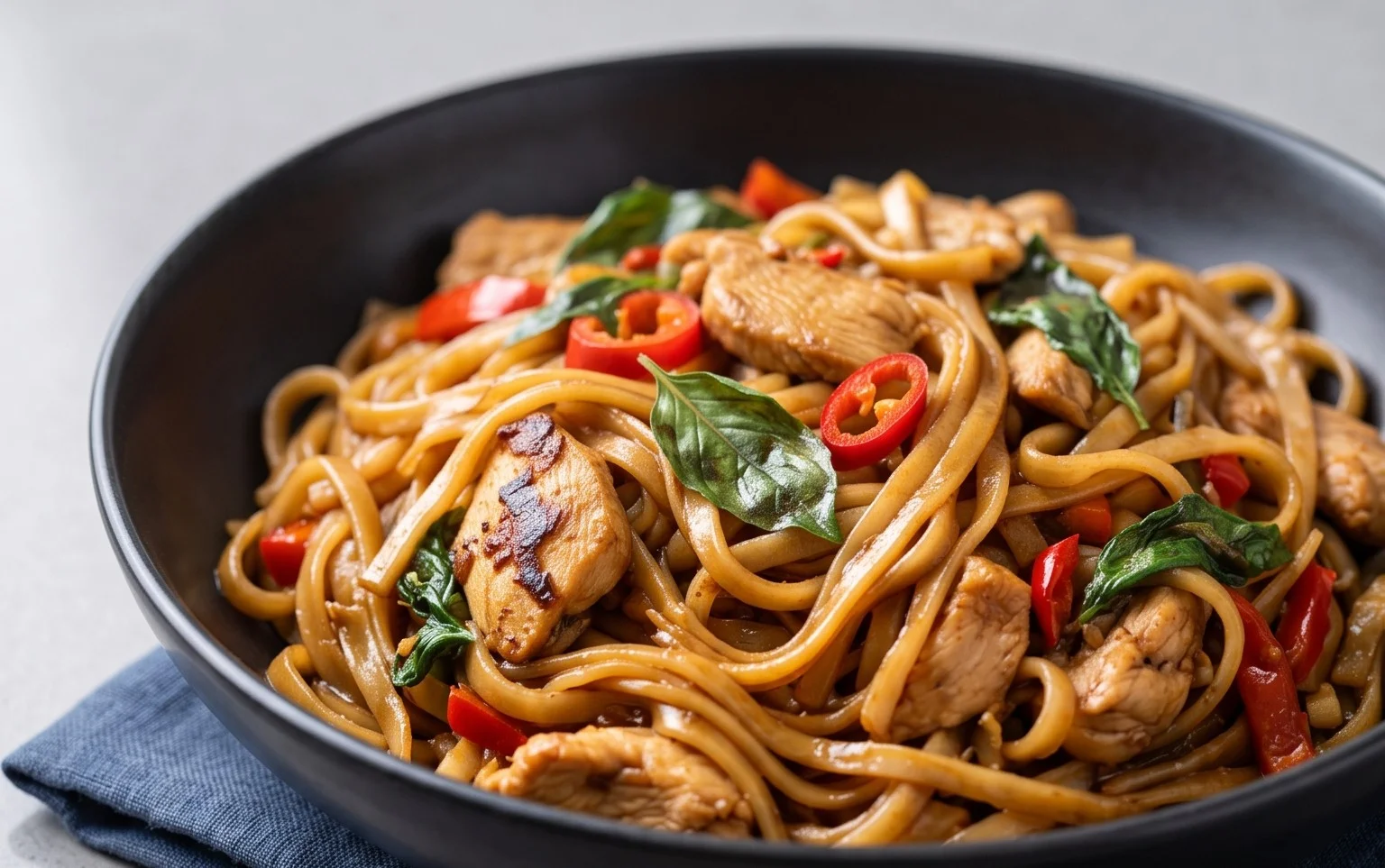
Drunken Noodles: A Spicy, Savory Symphony
There are certain dishes that just transport you. For me, Drunken Noodles, or Pad Kee Mao, is one of those culinary journeys. The name itself evokes a sense of rebellious, late-night indulgence, and the flavors definitely live up to the hype. This is a dish that’s bold, aromatic, and packed with a delightful punch. While it sounds complex, it’s surprisingly achievable in your own kitchen, and the payoff in taste is immense. Forget takeout; let’s dive into creating this vibrant masterpiece.
Ingredients:
The Art of Preparation: Getting Everything Ready
Before we even think about firing up the wok, the key to a smooth and successful Drunken Noodles experience is thorough mise en place. This means having all your ingredients prepped and within easy reach.
First, let’s tackle the noodles. If you’re using dried wide rice noodles, you’ll want to prepare them according to package directions. Typically, this involves soaking them in hot water or briefly boiling them until they are pliable but still have a slight bite (al dente). Overcooked noodles will become mushy and break apart easily, which is not ideal for this stir-fry. Once they’re ready, drain them well and toss them with a tiny bit of oil to prevent sticking. Set them aside.
Next, prepare your protein. I prefer chicken thighs for their tenderness and flavor, but chicken breast works beautifully too. Slice your chosen chicken into thin, bite-sized pieces. In a small bowl, toss the chicken with 1 teaspoon of soy sauce and let it marinate for about 10-15 minutes while you prep the other ingredients. This simple step adds an extra layer of savoriness to the chicken.
Now for the aromatics and vegetables. Mince your garlic finely. Slice your onion. For the chili peppers, if you’re brave and love heat, leave them whole or give them a rough chop. If you prefer a milder spice, you can remove the seeds and membranes before slicing or chopping. Wash your baby bok choy thoroughly and then cut each head in half or quarters, depending on their size. If you’re using larger bok choy, you might want to separate the stems from the leaves, as the stems will require slightly longer to cook. Finally, wash your holy basil leaves. These are crucial and lend that unmistakable fragrance to Pad Kee Mao. If you can’t find holy basil, Thai basil is a decent substitute, though the flavor profile will be slightly different. Separate the white and green parts of your green onion. The whites can be added with the onions for a milder onion flavor, while the green parts are best for a fresh garnish at the end.
Crafting the Flavorful Sauce
The magic of Drunken Noodles lies in its intensely savory and slightly sweet sauce. In a small bowl, whisk together the following: 3 teaspoons of soy sauce, 1.5 teaspoons of dark soy sauce (this provides that characteristic deep color and richer flavor), 2 teaspoons of oyster sauce (for umami depth), 1 tablespoon and 1 teaspoon of fish sauce (don’t be shy with the fish sauce; it’s a flavor enhancer!), and 2 teaspoons of brown sugar. This simple blend creates the complex flavor profile that defines the dish. Taste it and adjust if you feel it needs a little more sweetness or saltiness.
The Stir-Fry Frenzy: Bringin extractg It All Together
This is where the action happens! Get your wok or a large, heavy-bottomed skillet smoking hot over high heat. Add 2 tablespoons of your vegetable or canola oil. Once the oil is shimmering and just starting to smoke, add your marinated chicken in a single layer. Let it sear for a minute or two without moving it to get a good crust. Then, stir-fry the chicken until it’s almost cooked through, about 2-3 minutes. Remove the chicken from the wok and set it aside.
Add the remaining 1 tablespoon of oil to the hot wok. Swirl it around and then add your minced garlic and sliced onions (and the white parts of your green onion, if using). Stir-fry for about 30 seconds until fragrant. Be careful not to burn the garlic. Add the sliced Thai red chili peppers and stir-fry for another 30 seconds to release their heat and aroma.
Now, it’s time to introduce the bok choy. Add the bok choy to the wok and stir-fry for 1-2 minutes, or until the stems are starting to soften but the leaves are still vibrant green. If you separated the stems and leaves, add the stems first, then a minute later add the leaves.
Return the cooked chicken to the wok. Now, add your prepared rice noodles. Pour the pre-made sauce over everything. Toss and stir-fry vigorously, making sure to coat all the noodles and ingredients with the sauce. This is where you want to work quickly to prevent the noodles from clumping. The high heat and constant movement are key.
Finally, the star of the show – the holy basil! Add the generous cup of holy basil leaves to the wok. Stir-fry for just about 30 seconds to a minute, until the basil leaves are wilted and fragrant. Don’t overcook the basil, or you’ll lose its delicate aroma. Stir in the chopped green parts of the green onion.
Serve your Drunken Noodles immediately, while it’s piping hot. The aromas that will fill your kitchen are incredible, a true testament to the power of fresh ingredients and bold flavors. Enjoy this thrilling, spicy, and utterly satisfying dish!
Conclusion:
And there you have it – your guide to crafting a truly sensational plate of Drunken Noodles! This recipe is a winner because it’s incredibly flavorful, delivering a perfect balance of sweet, savory, and spicy notes that dance on your palate. The beauty of Pad Kee Mao, or Drunken Noodles, lies in its versatility and the satisfying chew of the wide rice noodles soaking up that delicious sauce. I truly hope you’ll give this recipe a try; it’s a fantastic weeknight meal that feels special enough for company but is surprisingly quick to whip up.
For serving, these noodles are a complete meal on their own, but they pair wonderfully with a crisp, refreshing cucumber salad or some steamed baby bok choy to cut through the richness. Don’t be afraid to get creative with variations! You can easily swap out the protein – chicken, beef, beef, tofu, or shrimp all work beautifully. For an extra kick, add more fresh chilies or a drizzle of Sriracha at the end. If you prefer it milder, simply reduce the amount of chili paste.
Frequently Asked Questions about Drunken Noodles:
What does “Drunken Noodles” actually mean?
The name “Drunken Noodles” (Pad Kee Mao) is a bit of a legend! One popular theory is that the dish was traditionally eaten after a night of drinking to help soak up non-alcoholic alternative and cure a hangover, thanks to its bold flavors and satisfying carbs. Another suggests it’s so delicious, it’s enough to make you forget your sobriety!
Can I make Drunken Noodles vegetarian or vegan?
Absolutely! For a vegetarian version, simply omit the meat and use extra vegetables like bell peppers, broccoli, or snap peas. You can also substitute firm or extra-firm tofu, pressed and then pan-fried or baked until golden brown. For a vegan Drunken Noodles, ensure your oyster sauce is replaced with a vegetarian stir-fry sauce or mushroom-based sauce, and double-check your fish sauce alternative if you use one.
My noodles are sticking together. How can I prevent this?
The key to preventing sticky noodles is to properly prepare them. Make sure you rinse your wide rice noodles under cold water after boiling them to stop the cooking process and remove excess starch. Also, ensure your wok or pan is hot enough when you add the noodles and sauce, and stir-fry them quickly. Adding a little extra oil to the noodles after rinsing can also help.
Drunken Noodles (Pad Kee Mao)
A classic Thai stir-fried noodle dish with a savory and spicy sauce, tender chicken, and crisp vegetables.
Ingredients
-
250 grams medium wide rice noodles (dried)
-
250 grams chicken thighs or chicken breast
-
3 tablespoons vegetable or canola oil (divided)
-
1 tablespoon minced garlic
-
1/2 onion (sliced)
-
2-3 Thai red chili peppers
-
4-5 Baby bok choy
-
1 cup Holy basil
-
1 Green Onion (White and green parts separate)
-
3 teaspoons soy sauce
-
1.5 teaspoon dark soy sauce
-
2 teaspoons oyster sauce
-
1 tablespoon + 1 teaspoon fish sauce
-
2 teaspoons brown sugar
Instructions
-
Step 1
Soak the rice noodles in hot water according to package directions until pliable. Drain and set aside. -
Step 2
Slice the chicken into bite-sized pieces. If using chicken thighs, remove any excess fat. For the sauce, whisk together 3 teaspoons soy sauce, 1.5 teaspoon dark soy sauce, 2 teaspoons oyster sauce, 1 tablespoon + 1 teaspoon fish sauce, and 2 teaspoons brown sugar. -
Step 3
Heat 1 tablespoon of oil in a wok or large skillet over high heat. Add the chicken and stir-fry until cooked through. Remove chicken from the wok and set aside. -
Step 4
Add the remaining 2 tablespoons of oil to the wok. Add minced garlic, sliced onion, and Thai red chili peppers. Stir-fry until fragrant and the onion is softened. -
Step 5
Add the baby bok choy to the wok and stir-fry for 1-2 minutes until slightly wilted. Add the cooked chicken back to the wok. -
Step 6
Add the soaked rice noodles to the wok along with the prepared sauce. Toss well to coat the noodles and ingredients. Cook for another 2-3 minutes until the noodles are heated through and the sauce has thickened slightly. -
Step 7
Stir in the Holy basil leaves and the white parts of the green onion. Cook for another minute until the basil is wilted. -
Step 8
Garnish with the green parts of the green onion before serving.
Important Information
Nutrition Facts (Per Serving)
It is important to consider this information as approximate and not to use it as definitive health advice.
Allergy Information
Please check ingredients for potential allergens and consult a health professional if in doubt.